Pigmentation and concerns like dark spots, sun damage or uneven skin tone are the most common reasons behind a visit to a dermatologist. Melasma, age spots, post-acne pigmentation or tanning patches on the face can also affect confidence. With updated healthcare and technology and advancements in dermatological lasers, radiant skin is possible without any downtime or invasive procedures.
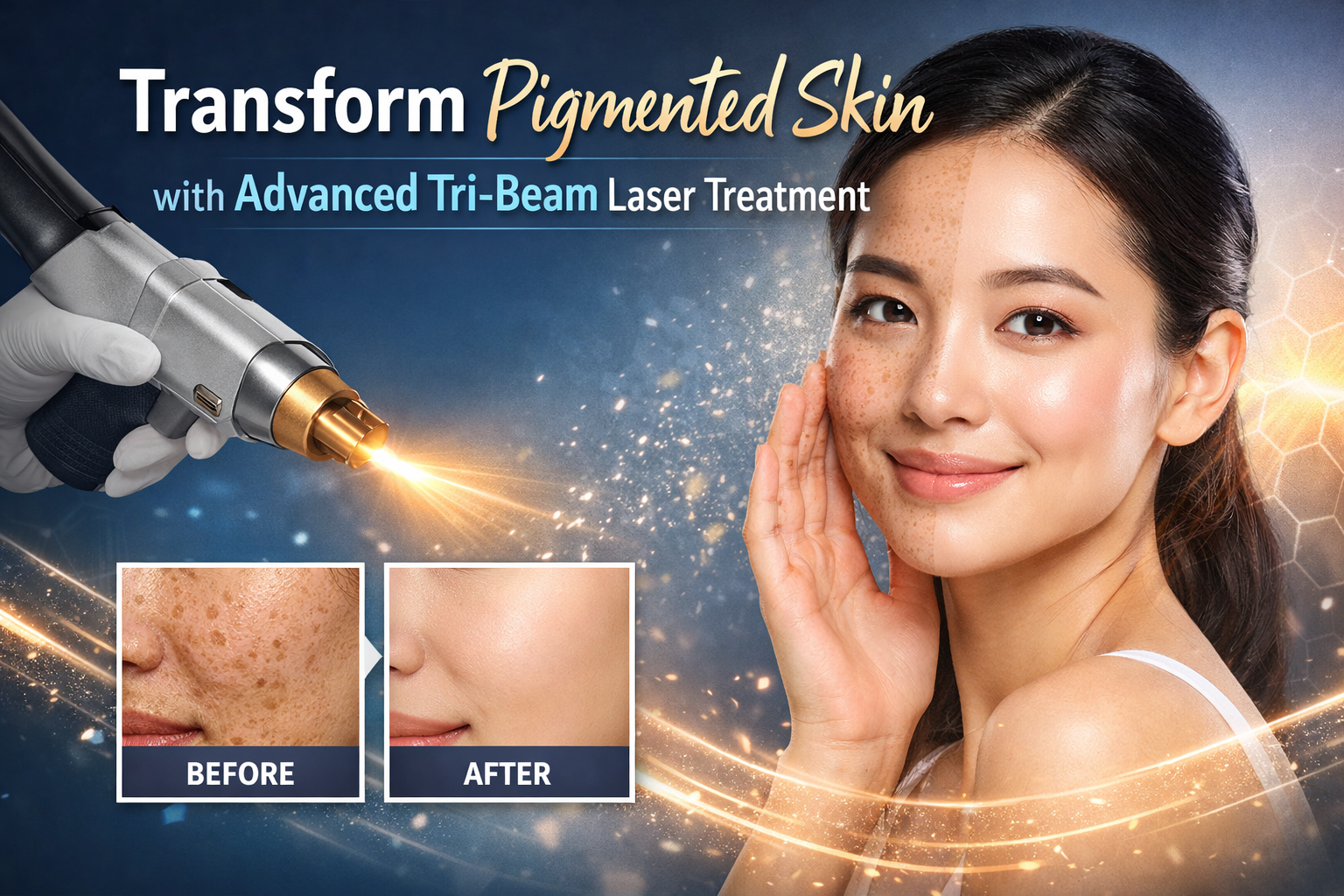
The most advanced technology available in skin care is Tri-Beam Laser treatment for pigmentation.
What is the Tri-Beam Laser?
Tri-Beam is an advanced laser system that uses three different wavelengths of visible light to safely target and break down pigmentation in the skin. What sets tri-beam apart from standard lasers is that it adapts to different types of pigmentation including superficial, deeper and even stubborn discoloration. It is highly effective in treating melasma, freckles, sun damage, post-acne dark spots and uneven skin tone and rejuvenating the skin.
How does Tri Beam work?
The Tri beam Laser uses laser light to break down dark pigment in the skin from both the epidermal and deeper layers of the skin. The laser is very sage and is suitable for medium to darker skin tones.
The three types of laser light used in Tri Beam are:
- 532 nm light acts and treats surface-level pigment like freckles and sunspots.
- 1064 nm light goes deeper and treats issues like melasma and old pigmentation.
- 1320 nm light helps improve skin texture, reduce oil, and boost collagen.
- it is mainly used for skin rejuvenation.
- How many sessions are needed? The number of sessions depends on your skin type and the severity of the pigmentation.
- Light pigmentation usually requires light pigmentation or sun damage, 1 to 2 sessions may be enough.
- For deeper pigmentation or melasma, it requires 3 to 6 sessions.
- Sessions are spaced by 3 to 4 weeks apart.
Is it safe for Indian Skin?
The 1064 nm wavelength used in the Tri- Beam laser is safe for darker skin tones. It goes deeper.